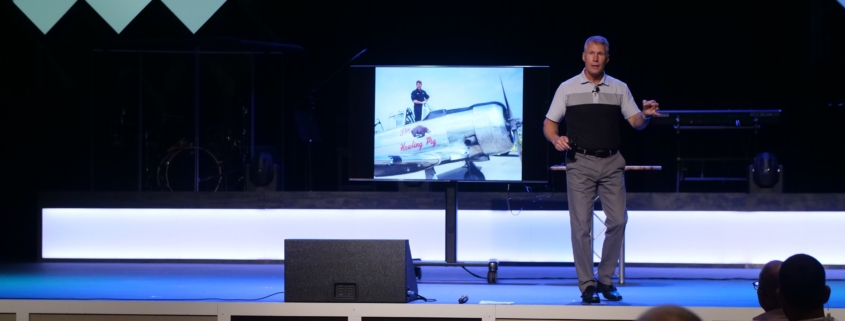
Odie Espenship speaking at a safety stand-down

Safety Week Ideas That Actually Change Behavior

Every year, companies spend real time and money on Safety Week. Posters go up, donuts get eaten, a quiz gets run. Then Monday of the following week, everyone goes back to doing things exactly the way they did before. I have spoken at more than 200 companies, and the Safety Weeks that stick all have one thing in common. They are built around behavior, not around activities.

Here are the ideas I have seen work, and how to put them together.

1. Start with a kickoff that sets the tone

The first 30 minutes decide whether people treat the week as a chore or a chance. A leader sharing a real story, not statistics, does more than any slide deck. People remember how a story made them feel, and feeling is what drives choices on a job site at 2 p.m. on a Thursday.

This is where many teams bring in an outside voice for the opening. A fresh perspective lets your own leaders listen instead of lecture. If you want to see how that works, take a look at my workplace safety keynote.

2. Run a hazard hunt that crews own

Split people into mixed teams, supervisors and new hires together, and send them out to find the hazards nobody has written up. Give the teams the authority to fix what they can that day. When people see a hazard they pointed out get fixed by Wednesday, they believe the program is real.

3. Practice speaking up

In the cockpit we brief before every flight, and anyone can say “I don’t like this.” On the ground, most crews have not practiced that. Pick one scenario a day, such as a rushed job or a shortcut a respected veteran takes, and have teams role play the moment of speaking up. It feels awkward for about two minutes and then it clicks.

4. Replace the toolbox talk lecture with a conversation

Five short talks, one per day, led by supervisors. Ask one question and then stay quiet. The best answers come after the silence that feels too long. Good daily topics are complacency, distractions, speaking up, the little things, and what you would want your family to know about how you work.

5. Make it personal

Have every person finish the sentence “I work safe because…” Post the answers where everyone walks by. Ask people to bring a photo of the person they go home to. The people who write the names of their kids rarely need a policy explained to them afterward.

6. Fight complacency with the little things

Complacency is the silent killer because it feels like competence. Pick one routine task and walk through it as if it were the first time. Teams nearly always find a step that drifted. That drift is where incidents start.

7. Close the week with a commitment, not a certificate

On Friday, ask each team to choose one specific behavior they will change and who will hold them to it. Follow up in 30 days. A follow up is what turns a week into a culture.

Where a speaker fits

A speaker will not replace the work above. A good one gives your people a shared moment, a common story, and a reason to care before the activities begin. Whether it is a Monday kickoff, a mid-week all hands or a closing session, a keynote customized to your hazards and your crews helps the rest of the week land. If you are planning for 2027, you can book a keynote or look at the safety leadership training videos for crews you cannot gather in one room.

Remember that what people SEE you do today will influence HOW they do it tomorrow. Make Safety Week the week they see you do it right.

Odie
Odie Espenship speaking at a safety stand-down

Safety Stand-Down Ideas Your Crews Will Actually Remember

Every year I hear the same thing from safety managers: “Odie, we have to hold a stand-down, and I don’t want it to be another morning of slides and donuts.” I get it. A stand-down is a gift: the work has stopped and every person in the room is listening. What you do with that hour decides whether they walk out thinking differently or just walk out.

I have spent about 23 years speaking to more than 200 companies, and before that I flew the A-10 Warthog in the U.S. Air Force. Today I fly as an international captain for a major airline based in Atlanta, Georgia, on the Airbus A350. In the fighter squadron we debriefed every flight, and it worked because it was honest, personal, and short on fluff. A good stand-down works the same way. Here are the safety stand-down ideas I have seen work best.

1. Open With a Story, Not a Slide

People forget statistics. They remember stories. Start your stand-down with a real one, ideally from your own site.

Mine is about my brother Johnny. I lost him in an aviation accident that I believe my own errant work behavior and failed leadership contributed to. Knowing the procedure is one thing. Doing it every time, on the day you are rushed, is something else. I was the leader of our operation, and I have had to ask myself what the people around me saw me do when I was in a hurry.

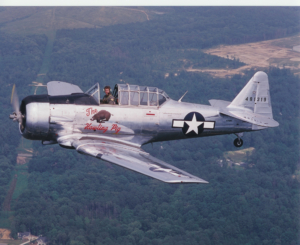
Odie Espenship flying The Howling Pig, a 1943 T-6 Texan

The Howling Pig, the 1943 T-6 Texan I flew on the airshow circuit.

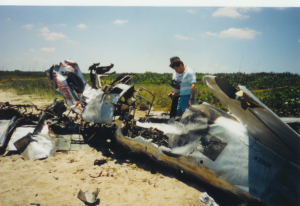
Wreckage of The Howling Pig T-6 after the April 21, 1995 accident

April 21, 1995. The accident that took my brother Johnny and started Target Leadership.

You don’t need a tragedy. A close call or a good catch someone made last month will do the job.

2. Hand the Microphone to Your Senior Hands

Your most experienced people carry more influence than any poster. Ask two or three of them to share a near miss, then ask a harder question: what shortcuts have the younger folks picked up by watching them?

One co-op safety coordinator heard my “It’s the Little Things” presentation at the NRECA Safety Summit, then showed it at her co-op’s January safety meetings. Here is what she wrote me:

“I showed it to our Co-op in our January safety meetings this week and I have never had the response from our people as I have had since the meeting. From our most senior lineman asking if I had him in mind when I showed it because of him taking a short cut and having younger apprentices assuming then that it was ok to cut corners. He told me he had some soul searching to do on his work practices as a senior leader.”

S.W., Safety/Loss Control Coordinator, NRECA

That is a stand-down that worked.

3. Practice Speaking Up, Out Loud

In aviation, we train first officers to challenge a captain, and we train captains to listen. Most crews have never practiced the actual words. So practice them. Pair people up and have them say, “Stop. I’m not comfortable with this. Let’s take a look.” Then have the supervisor practice the right answer: “Thank you. Show me.”

It feels awkward. That is the point. The first time someone says those words should not be the day it matters.

4. Hunt for Your “Little Things”

Big incidents almost always start small: a skipped step, an assumption, a check done from memory. Give each crew ten minutes to name the one little thing on their job most likely to bite them. Then fix a few together, with a name and a date attached.

5. Talk About Complacency and Hurry

Complacency is the silent killer, and hurry is its best friend. Ask the room: “Where are we rushing? Who is pushing the pace, and why?” Leaders, this is where you listen and don’t defend.

6. Let Leaders Go First

Crews watch what their supervisor does, not what the binder says. That is the size of the shadow you cast. Have a manager or superintendent open by owning one thing they need to do better. When the boss goes first, everybody else gets permission to be honest.

7. Bring In a Fresh Voice

Sometimes your people have heard your voice so often that it fades into the background. A fresh voice, from a sister company, a family member who lost someone, or an outside speaker, can reset the room. If you are considering one, here is how I approach a workplace safety keynote for stand-downs and Safety Week. If you have crews on every shift or at sites spread across the map, our safety training videos are built to be shown in short pieces at stand-downs and toolbox talks.

8. End With One Commitment, Then Follow Up

Close by asking every person to write down one thing they will do differently this week. Then bring it back up at the next toolbox talk. A stand-down should be the start of a conversation, not the end of one.

Quick List of Safety Stand-Down Topics

  • Shortcuts and normalization of “the way we’ve always done it”
  • Speaking up and stop-work authority
  • Complacency on routine jobs
  • Hurry, schedule pressure and fatigue
  • Supervisors as role models
  • Near misses and good catches from your own site

If you would like help making your next stand-down one your people talk about for months, I would be honored to be part of it. Check my availability here or call 770-356-6240.

Fly safe,
Odie

Target Leadership is now available on Nook and Kindle

A compelling and unprecedented perspective on leadership, Target Leadership, by Jeff “Odie” Espenship, CEO of Target Leadership, Inc., has been made available for the Kindle and Nook. In just a few short days, Target Leadership has received five stars on both Amazon and Barnes and Noble.

In Target Leadership, Jeff “Odie” Espenship gives you a flight plan that will guide and motivate your leadership team to become Target Leaders. Being a Target Leader takes courage, commitment, and humility. Staying the same is easy and change is difficult, but where there is a will, there is a way. Where there is no will, there is an excuse. Best practices in workplace leadership and safety involve attention to detail, avoiding complacency, and making sure that how it’s done around here is exactly the same as how it should be done around here.

Reader Feedback
“This guy was a USAF pilot (A-10 Warthog) with an ocean of experience in the world’s most advanced safety culture. So, when he writes about it you can believe it’s true.”

“I also was deeply touched by this fresh, humanistic approach to what many times is dull material.”

“From the Author’s tragic personal experience with casually disregarding (what can seem to be) tedious safety procedure to break downs and analysis of some of the world’s deadliest (and avoidable) accidents this book is both gripping and informative from start to finish.”

Download Target Leadership E-Book Now
Kindle Download: https://www.amazon.com/gp/product/B00D6OESDM/ref=cm_cr_ryp_prd_img_sol_0

Nook Download: https://www.barnesandnoble.com/w/target-leadership-jeff-odie-espenship/1115541059?ean=2940016794952

About Target Leadership
Target Leadership, founded by fighter pilots and operated by fighter pilots, use their experience as fighter pilots to motivate and encourage a company’s “Fighter Pilots” (or employees) to embrace leadership safety systems in the workplace. Jeff “Odie” Espenship has become one of the highest rated leadership-safety keynote speakers with Fortune 100 and 500 employees nationwide. His motivational DVDs, sold worldwide in two languages, can be purchased online at OdieVision.com. His much anticipated book “Target Leadership: Mangers Manage – Leaders Influence – Target Leaders Inspire” was released in May of 2013 and can be purchased online at Amazon or Barnes and Noble. Whether the audience is medical, manufacturing, chemical, utility, construction, banking, team sports, or retail, their programs will motivate the workforce to accelerate to new heights in leadership, safety, teamwork, and overall operational excellence.

For more information please visit https://targetleadership.com or call toll-free at (800) 392-1544.

Competence vs. Judgement

This post references the first official aviation accident in which texting was considered part of the cause. See this link.

Competence is one thing, poor judgment is another. The texting helicopter pilot was plenty competent. You? If you passed your driver’s test the state declares you a competent driver. But one more thing is essential to stay out of the hospital or morgue: attention to the job. In the fighter pilot realm we called this “mission orientation”. That is, knowing your mission and performing that mission while refusing to be distracted by qweep.

Qweep (n.) – Anything that distracts from the mission.

Your mission might be a safe trip to soccer practice or a road trip to Montana. You can do these while listening to the radio or engaging in small talk, but some distractions will compromise safety and must be ruthlessly eliminated. If fog gets so thick you cannot drive, don’t. If noise in the car is too loud to concentrate, turn down the noise. And if a phone keeps drawing your attention from the road, turn off the phone.

A pilot must protect the mission as though it were his life—because it is—and a driver must do the same. Politeness or bashfulness cannot be allowed to ruin a life. When the mission is being threatened, the offending distraction must be dealt with immediately and without mercy.