
Safety Stand-Down Ideas Your Crews Will Actually Remember
Every year I hear the same thing from safety managers: “Odie, we have to hold a stand-down, and I don’t want it to be another morning of slides and donuts.” I get it. A stand-down is a gift: the work has stopped and every person in the room is listening. What you do with that hour decides whether they walk out thinking differently or just walk out.
I have spent about 23 years speaking to more than 200 companies, and before that I flew the A-10 Warthog in the U.S. Air Force. Today I fly as an international captain for a major airline based in Atlanta, Georgia, on the Airbus A350. In the fighter squadron we debriefed every flight, and it worked because it was honest, personal, and short on fluff. A good stand-down works the same way. Here are the safety stand-down ideas I have seen work best.
1. Open With a Story, Not a Slide
People forget statistics. They remember stories. Start your stand-down with a real one, ideally from your own site.
Mine is about my brother Johnny. I lost him in an aviation accident that I believe my own errant work behavior and failed leadership contributed to. Knowing the procedure is one thing. Doing it every time, on the day you are rushed, is something else. I was the leader of our operation, and I have had to ask myself what the people around me saw me do when I was in a hurry.
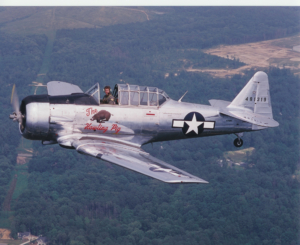
The Howling Pig, the 1943 T-6 Texan I flew on the airshow circuit.
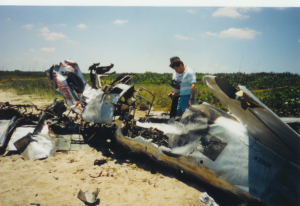
April 21, 1995. The accident that took my brother Johnny and started Target Leadership.
You don’t need a tragedy. A close call or a good catch someone made last month will do the job.
2. Hand the Microphone to Your Senior Hands
Your most experienced people carry more influence than any poster. Ask two or three of them to share a near miss, then ask a harder question: what shortcuts have the younger folks picked up by watching them?
One co-op safety coordinator heard my “It’s the Little Things” presentation at the NRECA Safety Summit, then showed it at her co-op’s January safety meetings. Here is what she wrote me:
“I showed it to our Co-op in our January safety meetings this week and I have never had the response from our people as I have had since the meeting. From our most senior lineman asking if I had him in mind when I showed it because of him taking a short cut and having younger apprentices assuming then that it was ok to cut corners. He told me he had some soul searching to do on his work practices as a senior leader.”
S.W., Safety/Loss Control Coordinator, NRECA
That is a stand-down that worked.
3. Practice Speaking Up, Out Loud
In aviation, we train first officers to challenge a captain, and we train captains to listen. Most crews have never practiced the actual words. So practice them. Pair people up and have them say, “Stop. I’m not comfortable with this. Let’s take a look.” Then have the supervisor practice the right answer: “Thank you. Show me.”
It feels awkward. That is the point. The first time someone says those words should not be the day it matters.
4. Hunt for Your “Little Things”
Big incidents almost always start small: a skipped step, an assumption, a check done from memory. Give each crew ten minutes to name the one little thing on their job most likely to bite them. Then fix a few together, with a name and a date attached.
5. Talk About Complacency and Hurry
Complacency is the silent killer, and hurry is its best friend. Ask the room: “Where are we rushing? Who is pushing the pace, and why?” Leaders, this is where you listen and don’t defend.
6. Let Leaders Go First
Crews watch what their supervisor does, not what the binder says. That is the size of the shadow you cast. Have a manager or superintendent open by owning one thing they need to do better. When the boss goes first, everybody else gets permission to be honest.
7. Bring In a Fresh Voice
Sometimes your people have heard your voice so often that it fades into the background. A fresh voice, from a sister company, a family member who lost someone, or an outside speaker, can reset the room. If you are considering one, here is how I approach a workplace safety keynote for stand-downs and Safety Week. If you have crews on every shift or at sites spread across the map, our safety training videos are built to be shown in short pieces at stand-downs and toolbox talks.
8. End With One Commitment, Then Follow Up
Close by asking every person to write down one thing they will do differently this week. Then bring it back up at the next toolbox talk. A stand-down should be the start of a conversation, not the end of one.
Quick List of Safety Stand-Down Topics
- Shortcuts and normalization of “the way we’ve always done it”
- Speaking up and stop-work authority
- Complacency on routine jobs
- Hurry, schedule pressure and fatigue
- Supervisors as role models
- Near misses and good catches from your own site
If you would like help making your next stand-down one your people talk about for months, I would be honored to be part of it. Check my availability here or call 770-356-6240.
Fly safe,
Odie

